

Coffee Leaf Tea: The Unique Herbal Drink from the Coffee Plant


Coffee Leaf Tea: The Hidden Brew from the Coffee Tree
Most people know the coffee plant for one thing: the beans that fuel millions of mornings around the world. But few realize that the same plant holds another secret—one that has quietly existed for generations among coffee farmers. Long before specialty cafés and modern brewing methods, people in coffee-growing regions were already enjoying a gentle drink made not from the beans, but from the leaves of the coffee tree.
This drink is known as Coffee Leaf Tea. Despite its name, it is not technically a tea in the traditional sense. Instead, it is a herbal infusion made from the dried leaves of coffee plants. Yet the experience of drinking it sits somewhere between tea and coffee—lighter than one, more intriguing than the other.
In recent years, Coffee Leaf Tea has begun attracting attention among tea enthusiasts, sustainability advocates, and curious drinkers looking for something new. It offers a subtle flavor, a lower caffeine level, and an interesting story that connects agriculture, tradition, and innovation.
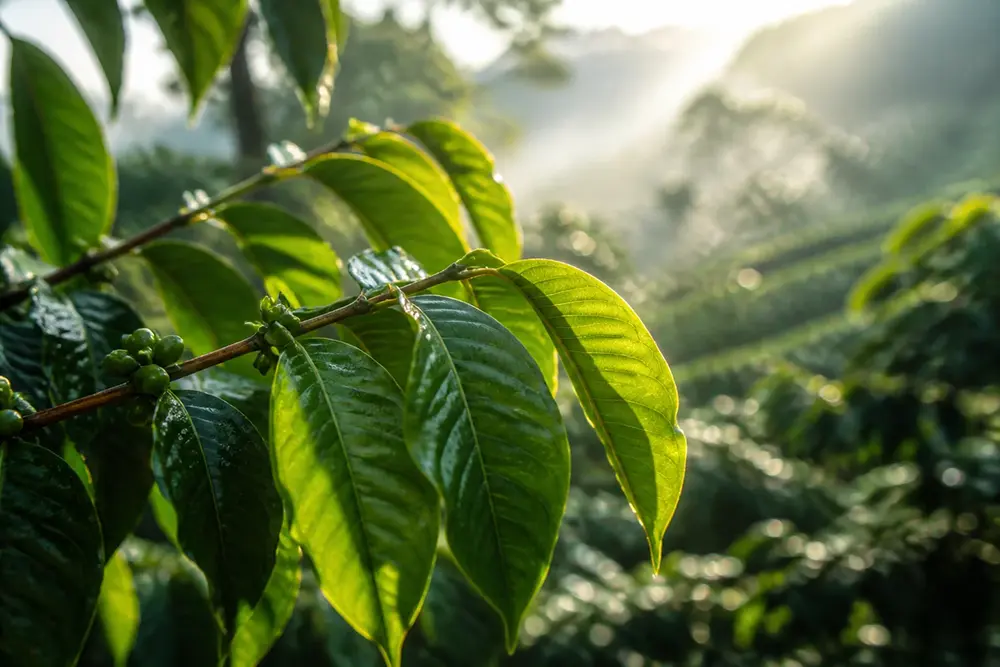
Fresh coffee leaves growing on a tropical coffee plant — the natural source used to produce coffee leaf tea.
What Exactly Is Coffee Leaf Tea?
Coffee Leaf Tea is an herbal infusion made from the leaves of the Coffea plant, the same plant that produces coffee cherries and beans. Farmers harvest young or mature leaves, dry them, and then brew them in hot water much like traditional tea leaves.
However, it is important to understand that true tea comes exclusively from the plant Camellia sinensis. That plant produces all classic teas such as black tea, green tea, oolong, and white tea. Because Coffee Leaf Tea comes from a different plant entirely, it falls into the category of herbal infusions or tisanes.
Even so, its preparation, appearance, and ritual feel remarkably similar to traditional tea drinking. The leaves are steeped in hot water, the aroma rises gently from the cup, and the flavor develops slowly with each sip.

Traditional drying of coffee leaves under the sun, a step used in preparing coffee leaf tea in coffee‑growing regions
A Traditional Drink with Ancient Roots
Although Coffee Leaf Tea may sound like a modern discovery, it has existed for centuries in several coffee-growing regions.
In Ethiopia, the birthplace of coffee, people have historically brewed the leaves of the coffee plant into a drink known locally as kuti. Farmers would dry the leaves and prepare them as a daily beverage—especially during times when coffee cherries were not available.
In Indonesia, particularly on the island of Sumatra, a similar drink called kawa daun has been consumed for generations. The leaves are roasted slightly, then steeped in hot water to create a deep amber infusion with a mild earthy sweetness.
These traditions show that Coffee Leaf Tea is not a novelty product invented for modern markets. Instead, it is a rediscovery of a beverage that has quietly existed alongside coffee cultivation for centuries.
How Coffee Leaf Tea Is Made
The production of Coffee Leaf Tea is surprisingly simple, yet each step influences the final flavor.
Harvesting the Leaves
Farmers select healthy leaves from coffee trees, often choosing young leaves that contain higher concentrations of aromatic compounds and beneficial antioxidants. Harvesting must be done carefully so the plant continues producing coffee cherries.
Drying and Processing
After harvesting, the leaves are typically sun‑dried or air‑dried. In some regions they are lightly roasted, which deepens the color and adds a warmer aroma.
This stage is similar to the early processing steps of traditional teas. If you compare it to the methods used for classic varieties such as Iranian Black Tea, the philosophy is surprisingly alike: careful leaf selection and gentle processing determine the quality of the final brew.
Brewing the Leaves
Once dried, the leaves are ready to be brewed. When hot water is poured over them, they release subtle aromas and a clear golden‑brown infusion.
The process looks almost identical to brewing loose‑leaf tea, which is one reason many people naturally categorize it alongside tea rather than coffee.
Flavor Profile: What Does Coffee Leaf Tea Taste Like?
One of the most surprising aspects of Coffee Leaf Tea is how different it tastes from coffee.
Anyone expecting the bold bitterness or roasted intensity of coffee will likely be surprised. Instead, the flavor is delicate and layered.
Common tasting notes include:
– Mild herbal freshness
– Soft earthy undertones
– A gentle natural sweetness
– Light grassy or woody notes
Some people compare it to a light green tea, while others say it resembles a very delicate black tea without the strong tannins.
The result is a drink that feels calming and refreshing rather than stimulating and intense.
Caffeine Content: Much Lower Than Coffee
Another reason Coffee Leaf Tea is gaining attention is its moderate caffeine content.
Coffee beans contain a high level of caffeine because the compound is concentrated in the seeds. Coffee leaves, however, contain significantly less.
As a result:
– contains far less caffeine than coffee
– It often contains less caffeine than many traditional teas
– can be suitable for afternoon or evening drinking
For people who enjoy warm beverages but want to reduce their caffeine intake, Coffee Leaf Tea offers an appealing alternative.
Health Benefits and Natural Compounds
Coffee leaves contain several bioactive compounds that researchers are beginning to study more closely.
Among the most notable are:
– Antioxidants that help protect cells from oxidative stress
– Polyphenols, commonly associated with anti‑inflammatory effects
– Mangiferin, a compound also found in mango leaves that has been linked to metabolic and immune health
While research is still ongoing, the presence of these compounds suggests that Coffee Leaf Tea may share some of the wellness benefits often associated with herbal teas and traditional tea varieties.

Golden coffee leaf tea being poured from a glass teapot into a cup, revealing its light color and smooth character.
Explore our Coffee‑Infused Lahijan Tea, crafted from select coffee and finest black tea for a smooth finish.
How to Brew Coffee Leaf Tea at Home
Preparing Coffee Leaf Tea is simple and requires no special equipment.
Follow these basic steps:
- Add 1–2 teaspoons of dried coffee leaves to a teapot or cup.
- Pour hot water (around 90°C / 195°F)** over the leaves.
- Allow the leaves to steep for several minutes until the flavor develops.
- Strain and enjoy.
Many people prefer to drink it plain in order to appreciate its natural flavor. However, it can also be paired with:
– honey
– lemon
– light spices such as cinnamon
These additions can enhance the natural sweetness without overpowering the subtle taste.
Coffee Leaf Tea vs Coffee‑Flavored Tea
It is easy to confuse Coffee Leaf Tea with another beverage sometimes called coffee‑flavored tea. Despite the similar names, they are quite different.
Coffee Leaf Tea is made from the actual leaves of the coffee plant.
Coffee‑flavored tea, on the other hand, usually starts with traditional tea—often black tea—and is blended with coffee beans or coffee aromas to create a hybrid flavor. If you’re curious about that style of beverage, you can explore the concept further in our article about Coffee‑Flavored Tea.
Understanding this distinction helps highlight why Coffee Leaf Tea stands in a category of its own.
Sustainability and a New Opportunity for Farmers
One of the most interesting aspects of Coffee Leaf Tea is its role in sustainable agriculture.
Coffee farming typically produces income only during the harvest season when cherries are collected. By harvesting leaves as well, farmers can generate additional income without planting new crops.
This approach offers several benefits:
– better use of existing plants
– additional revenue for farmers
– reduced agricultural waste
– a more sustainable farming system
For this reason, Coffee Leaf Tea is increasingly being promoted as an environmentally friendly product within the specialty beverage market.
Why Coffee Leaf Tea Is Becoming Popular
Several trends are helping Coffee Leaf Tea gain attention around the world:
– growing interest in unique tea experiences
– demand for lower‑caffeine beverages
– curiosity about coffee plant by‑products
– increased focus on sustainable agriculture
Tea enthusiasts enjoy discovering new infusions, while coffee lovers find it fascinating to explore a completely different side of the coffee plant.
In many ways, Coffee Leaf Tea represents a bridge between two global beverage cultures.
Final Thoughts
Coffee Leaf Tea is one of those rare drinks that feels both ancient and new at the same time. Rooted in the traditions of coffee‑growing communities, yet only recently introduced to wider audiences, it offers a fresh perspective on a plant we thought we already understood.
With its mild flavor, gentle caffeine level, and sustainable story, Coffee Leaf Tea invites curious drinkers to experience the coffee plant in an entirely different way.
Sometimes the most interesting discoveries are not new inventions—but forgotten traditions waiting to be rediscovered.
Common Questions About Coffee Leaf Tea
Is Coffee Leaf Tea actually tea?
Not technically. True tea comes from the Camellia sinensis plant, while Coffee Leaf Tea is an herbal infusion made from coffee plant leaves.
Does Coffee Leaf Tea taste like coffee?
No. Its flavor is much lighter and more herbal, with mild earthy and slightly sweet notes.
Does it contain caffeine?
Yes, but significantly less than coffee and often less than many traditional teas.
Can Coffee Leaf Tea replace coffee?
It may not replace the strong flavor and caffeine kick of coffee, but it can be a great alternative for those looking for a lighter beverage.