

Orange Blossom Tea: The Fragrance of Spring in a Cup

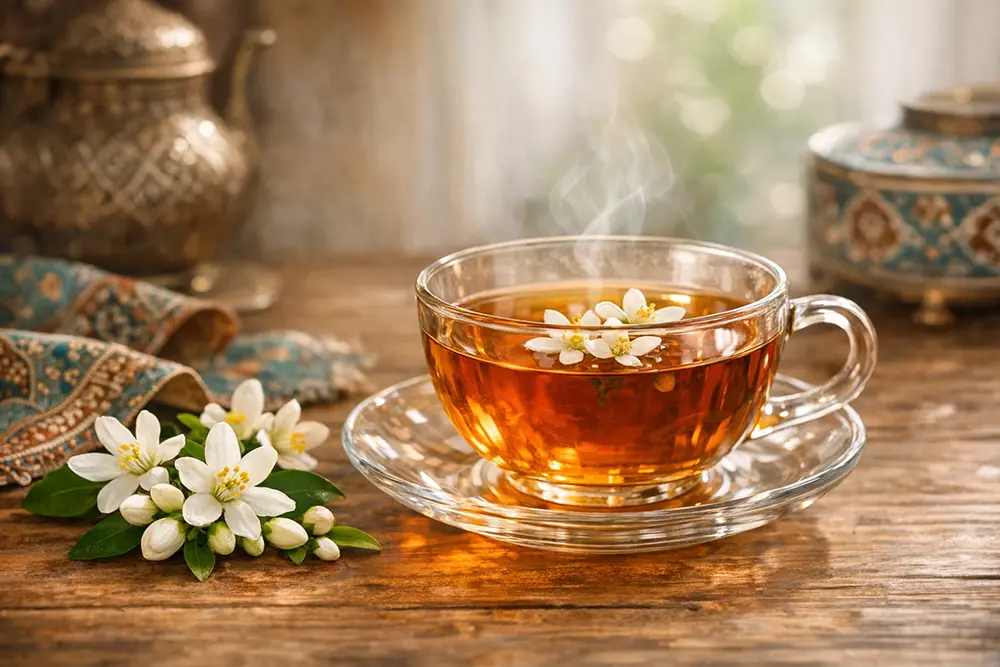
Some teas are remembered for their strength, others for their depth. But a few are cherished for something more delicate—their fragrance. Orange blossom tea belongs to this rare category. Before the first sip even touches the lips, its aroma quietly announces itself, soft and floral, like the gentle air of a spring morning in a citrus garden.
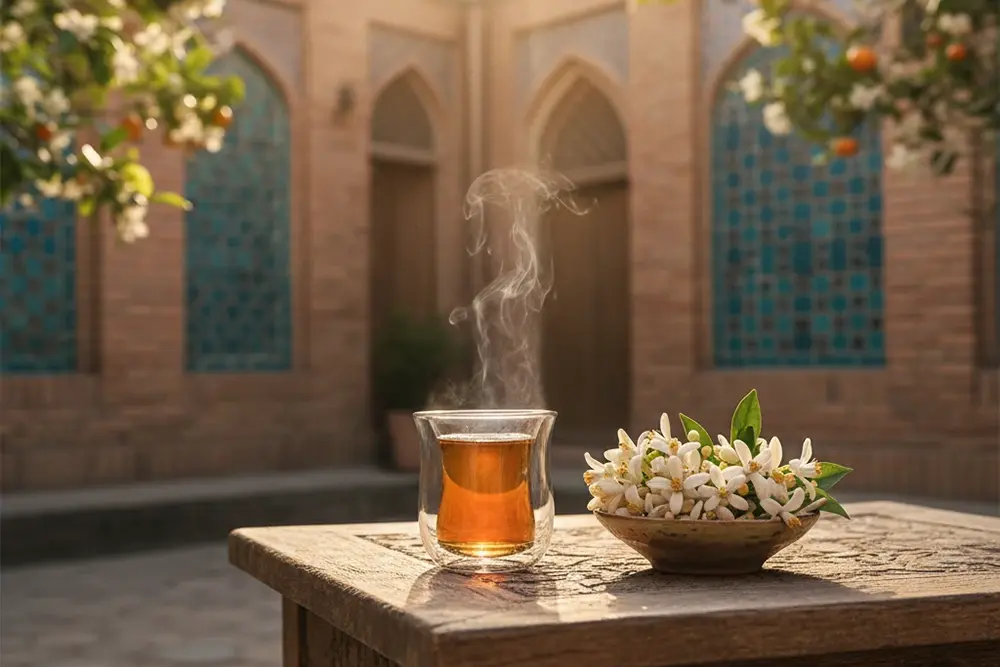
In many parts of the world, orange trees are valued for their fruit. Yet in parts of Iran, particularly in the warm southern regions and along the Caspian coast, the blossoms themselves hold a special place. Their scent signals the arrival of spring, filling streets and gardens with a perfume that feels both refreshing and calming.
When paired with tea, these blossoms create a drink that is not only flavorful, but also deeply evocative.
The Cultural Story Behind Orange Blossoms
Orange blossom—known in Persian as Bahar Narenj—has long been treasured in Iranian culture. For generations, the blossoms have been used in traditional sweets, syrups, and herbal infusions. In cities such as Shiraz, the scent of blooming orange trees is almost synonymous with the arrival of spring.
The blossoms are usually harvested in early spring, when their fragrance is at its peak. At this moment, the flowers are delicate and full of essential oils that carry their distinctive aroma.
This brief harvesting window makes orange blossoms especially precious. Their fragrance captures a specific moment in the year—when winter fades and warmer days begin.
Adding these blossoms to tea allows that moment to be preserved and enjoyed long after the season has passed.
Why Orange Blossom Works So Beautifully With Tea
Tea has an extraordinary ability to carry aroma. While its flavor comes from the leaves themselves, its character can be gently transformed by carefully selected natural ingredients.
Orange blossom pairs especially well with tea because its fragrance is:
– Light and floral
– Slightly sweet
– Soft rather than overpowering
Unlike stronger spices or fruits, orange blossom does not dominate the tea. Instead, it enhances the tea’s natural character.
When blended with black tea, the result is a cup that feels balanced—warm and full-bodied from the tea, yet brightened by a delicate floral note.
With green or white tea, the experience becomes even softer, creating a cup that feels almost like spring captured in liquid form.
A Tea Inspired by Persian Spring
Spring in citrus-growing regions is a remarkable time. Orange trees burst into bloom, covering entire orchards with white blossoms. Their fragrance travels through the air, sometimes noticeable from several streets away.
This seasonal atmosphere has inspired many traditional drinks and desserts. Orange blossom tea is one of the simplest yet most elegant ways to capture this experience.
Unlike complex flavored teas, this blend relies on only a few elements: quality tea leaves and carefully dried blossoms. The simplicity allows the natural fragrance of the flowers to remain the centerpiece.
It is a tea that invites slow drinking—one that encourages a pause in the day.
The soothing aroma of orange blossoms brings spring to every cup — yet if you seek a cooler, invigorating twist, discover the pure freshness of [Mint Tea: Cool Comfort in a Warm Cup]. Together, these teas offer a beautiful balance of floral fragrance and herbal calm
Brewing Orange Blossom Tea
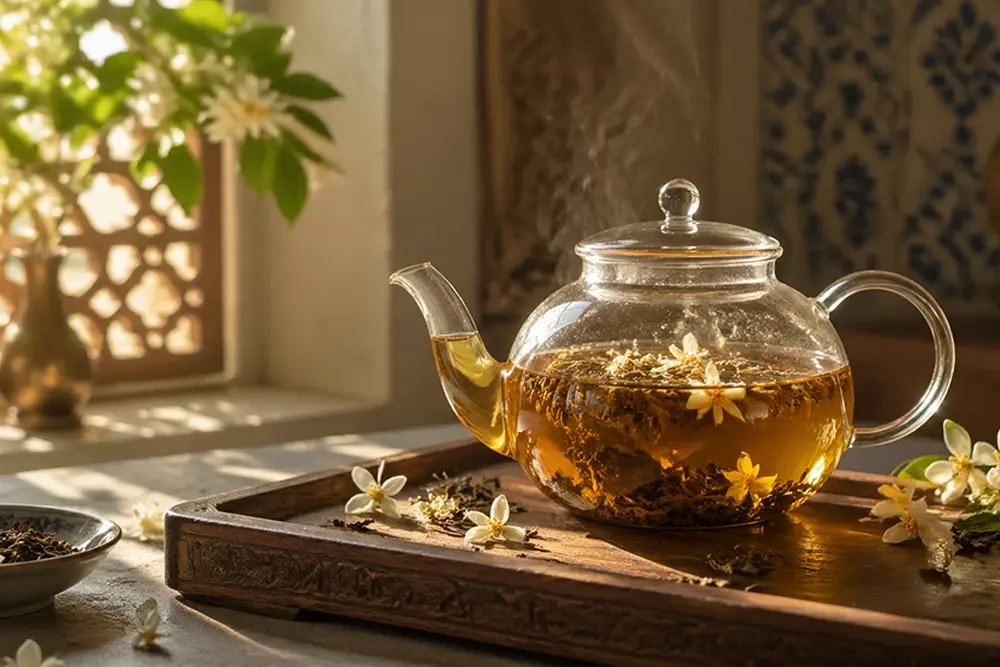
Preparing orange blossom tea does not require complicated techniques. In fact, simplicity helps preserve the delicate aroma of the blossoms.
A typical preparation includes:
– Freshly boiled water slightly cooled
– High‑quality tea leaves
– A small amount of dried orange blossom
The blossoms should be used sparingly. Just a small pinch is enough to release their fragrance.
After steeping , the tea develops a gentle floral aroma that rises from the cup before the first sip.
Some people enjoy it plain, while others add a small piece of rock sugar or a touch of honey to complement the floral notes.
For a fragrant cup inspired by spring, explore our Special Blends combining orange blossom and fine tea leaves.
A Tea for Calm Moments
One of the reasons orange blossom has remained popular in herbal drinks is its association with calmness and relaxation. In traditional Persian herbal practices, orange blossom infusions are often enjoyed in the evening for their soothing qualities.
When combined with tea, the effect becomes both comforting and refreshing. It is not a heavy drink, nor an overly sweet one. Instead, it offers a quiet balance between warmth and fragrance.
For many tea drinkers, it becomes the perfect companion for peaceful moments—reading a book, enjoying a quiet afternoon, or sharing tea with friends.
While orange blossom tea captures the essence of gentle mornings, [Coffee‑Flavored Tea] brings warmth and depth to cozy afternoons. Both offer unique sensory journeys — one floral, one roasted, each worth savoring.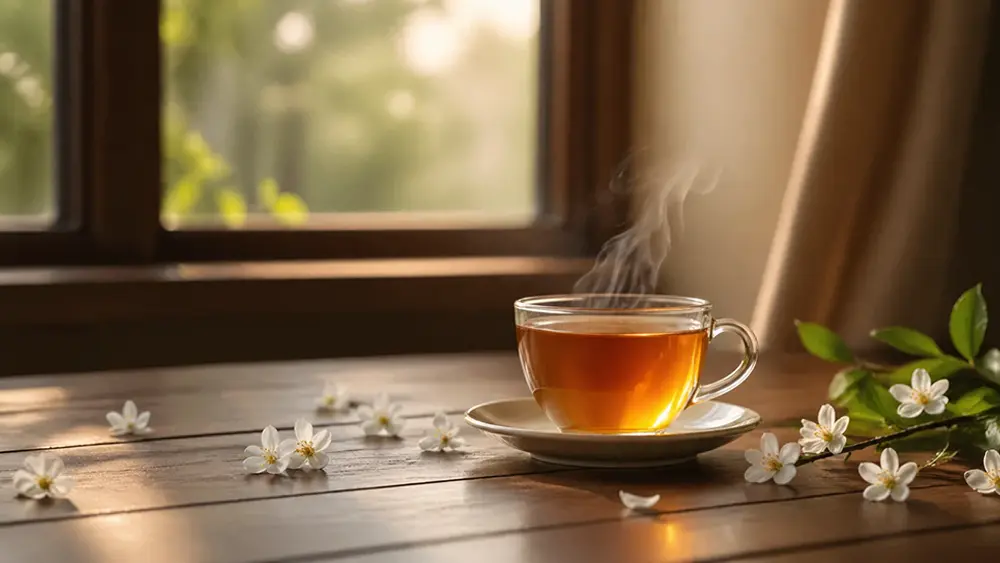
The Gentle Elegance of Floral Tea
In a world filled with bold and intense flavors, orange blossom tea reminds us that subtlety can be just as memorable. Its beauty lies not in strength, but in harmony.
The tea leaf provides depth and body. The blossoms bring aroma and softness. Together, they create a cup that feels both traditional and timeless.
With every sip, the fragrance of spring lingers—quiet, delicate, and unmistakably elegant.
If you’re seeking an even more delicate and minimalist tea experience, [White Tea: The Quiet Elegance of the Tea World] introduces a serene side to the tea world.