

Rooibos Chai: A Caffeine‑Free Alternative

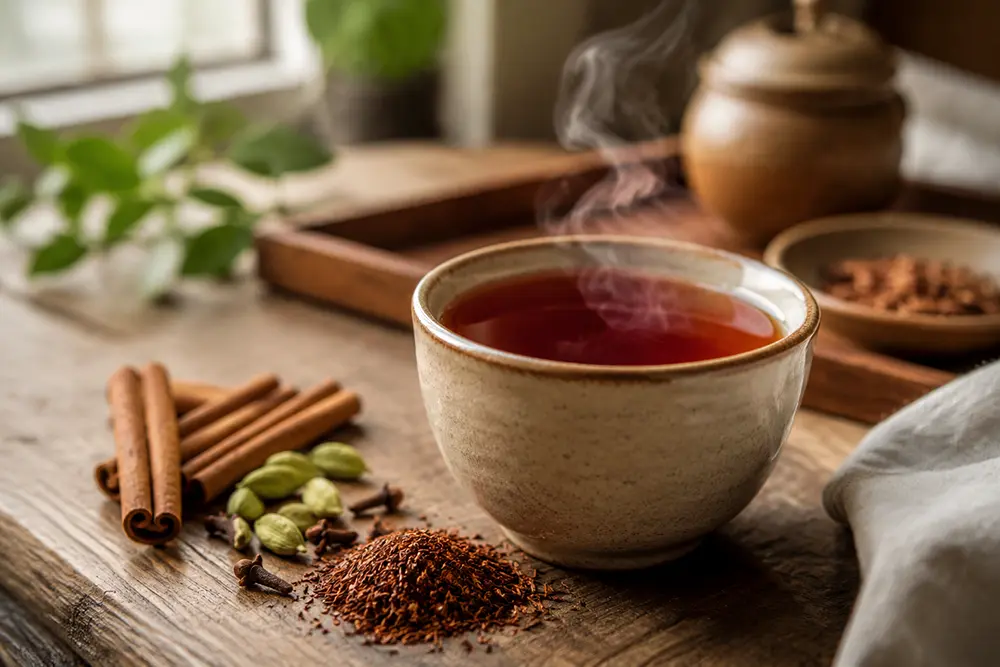
Many people love the comfort of tea but prefer to avoid caffeine, especially in the late evening. Rooibos Chai offers a warm and fragrant option for these moments. It carries the richness of spices and the natural sweetness of South African rooibos, creating a cup that feels soothing, cultural, and deeply comforting. Every sip feels like a small pause in a day that moves too quickly.
The Story Behind Rooibos Tea
Rooibos comes from the mountainous regions of South Africa and has been part of local tradition for generations. Although it is often called tea, it is technically an herbal infusion made from the leaves of the rooibos plant. After harvesting, the leaves dry under the sun and develop their characteristic red-brown color.
This natural processing gives rooibos a gentle sweetness and earthy aroma. Because it contains no caffeine, it became a popular evening drink in many parts of the world. Its warm flavor makes it a natural companion for spices, which is how the modern blend known as Rooibos Chai emerged.
What Makes Rooibos Chai Special
Rooibos Chai blends rooibos leaves with spices such as cinnamon, cardamom, clove, and ginger. These spices add warmth without overpowering the natural flavor of the rooibos. Instead of the strength you find in traditional black tea–based chai, this version feels softer and smoother.
Its naturally sweet profile makes it ideal for people who enjoy chai but prefer a gentler taste. The blend is also perfect for late-night moments when the body needs calm rather than stimulation.
Why Tea Lovers Choose Rooibos Instead of Black Tea
Many tea drinkers reach for Rooibos Chai when they want the emotional comfort of chai without the effects of caffeine. While traditional chai made with black tea is energizing, rooibos offers a different experience. It feels grounding, warm, and steady.
Some people alternate between the two depending on the time of day. For their energetic mornings, they enjoy classic blends. For peaceful evenings, they choose rooibos. This rhythm creates a balance that feels good for both mind and body.
If you want to explore classic blends made from Iranian tea, you can read Iranian Black Tea: Daily Energy with a Naturally Rich Aroma, where the natural depth of Iranian tea’s flavor is described beautifully.

Why tea lovers choose rooibos instead of black tea: a warm, caffeine-free chai alternative.
How to Prepare Rooibos Chai at Home
Brewing Rooibos Chai at home is simple. The flavors develop gradually, and the infusion stays smooth even if you let it steep longer than usual. This makes it a forgiving drink for beginners and a relaxing ritual for experienced tea lovers.
A simple method for home preparation:
- Place a teaspoon of rooibos leaves into hot water.
- Add spices such as cinnamon, ginger, or cardamom.
- Let the mixture steep until it becomes rich in color and aroma.
- Add warm milk or a touch of honey if you enjoy a creamier cup.
You can also prepare a stronger concentrate and store it in the refrigerator for iced versions. Rooibos stays flavorful even when cold, which makes it a refreshing choice on warm days.
Enjoying Rooibos Chai With Milk or Sweeteners
Rooibos blends beautifully with milk. Its natural sweetness gives the drink a soft and comforting character. Many cafés now offer Rooibos Chai Latte as a caffeine‑free alternative to classic chai lattes. At home, you can use dairy milk or plant‑based options such as oat or almond milk.
Sweeteners like honey, brown sugar, or date syrup add depth to the spices and make the drink even more aromatic. Every adjustment creates a unique flavor experience, allowing you to make the cup personal.
Rooibos Chai in Today’s Tea Culture
Rooibos Chai has become more than a simple herbal drink. It is now part of global tea culture, especially in places where people seek calm and health-conscious choices. Modern cafés serve it in creative forms, from creamy lattes to layered iced drinks.
In many homes, it has become the evening tea of choice. People enjoy it after dinner or during quiet moments when they want warmth without stimulation. Its smooth body and warm spices make it a drink that feels timeless.
In Iran, interest in caffeine‑free herbal blends has grown significantly. Tea lovers appreciate drinks that remain connected to the culture of hospitality while being gentle enough for nighttime enjoyment. Rooibos Chai fits beautifully into this lifestyle—warm, simple, and reassuring.
How Rooibos Chai Complements Chaylar Black Tea
Fans of traditional Iranian tea can enjoy Rooibos Chai as a calming counterpart to their daily routine. Chaylar Black Tea offers the rich depth of handpicked leaves from the northern regions of Iran. Rooibos Chai, on the other hand, adds a caffeine‑free option for moments of relaxation.
Together, they create a balanced tea experience. One provides energy and focus during active hours. The other supports rest and calm when the day slows down. Many tea enthusiasts appreciate having both choices available in their home tea collection.
Cultural Touch: A Warm Cup for Slow Moments
Tea has always been a symbol of connection and reflection. Rooibos Chai continues this tradition in its own gentle way. The spices bring warmth, while the rooibos leaves create a natural sweetness that invites slow sipping.
Whether shared with friends, served in a quiet evening, or enjoyed alone while reading a book, Rooibos Chai feels like a moment of stillness. Its character is peaceful yet expressive—much like the cultural experience of tea itself.
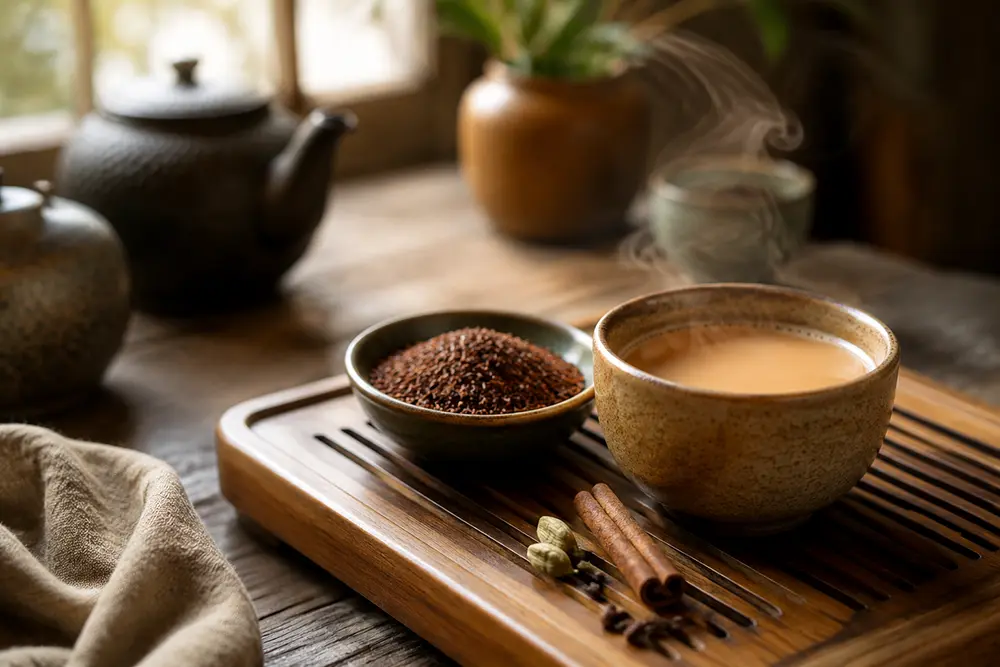
A warm cup of rooibos chai for slow, quiet moments of tea culture and reflection.
A Peaceful Wrap-Up
Rooibos Chai is more than a caffeine‑free alternative. It is a warm blend that brings together nature, culture, and calmness. The combination of aromatic spices and naturally sweet rooibos makes it a drink that feels familiar yet refreshingly new.
For people who love the emotion and ritual of tea but prefer to avoid stimulation, this blend is a perfect companion. If you enjoy rich and bold drinks like those described in Dirty Chai: Where Tea Meets Espresso in a Bold Cultural Blend, Rooibos Chai offers the gentler side of that same warm experience.
More Questions About Rooibos Chai
1. Is Rooibos Chai naturally caffeine‑free?
Yes. Rooibos plants do not contain caffeine, making this blend suitable for evening relaxation or for people who avoid stimulants.
2. Can I enjoy Rooibos Chai with milk?
Absolutely. Rooibos pairs beautifully with milk, especially when prepared as a warm latte or iced latte.
3. How does Rooibos Chai taste compared to traditional chai?
It is softer, naturally sweet, and less bold than black‑tea‑based chai. The spices remain warm but feel smoother.
4. Can Rooibos Chai be served cold?
Yes. Rooibos maintains its flavor when chilled, making it a good base for iced teas.
5. Is Rooibos Chai suitable for children?
Many families enjoy rooibos because it has no caffeine and tastes gentle, but preferences vary.
6. How long should Rooibos Chai steep?
You can let it steep until it develops a rich color and strong aroma. It remains smooth even with longer steeping.
7. Does Rooibos Chai have health benefits?
Rooibos is rich in antioxidants, and many people find it soothing for digestion and calming for the body.