

Orange-Flavored Black Tea: A Citrusy Blend of Narenj & Black Tea

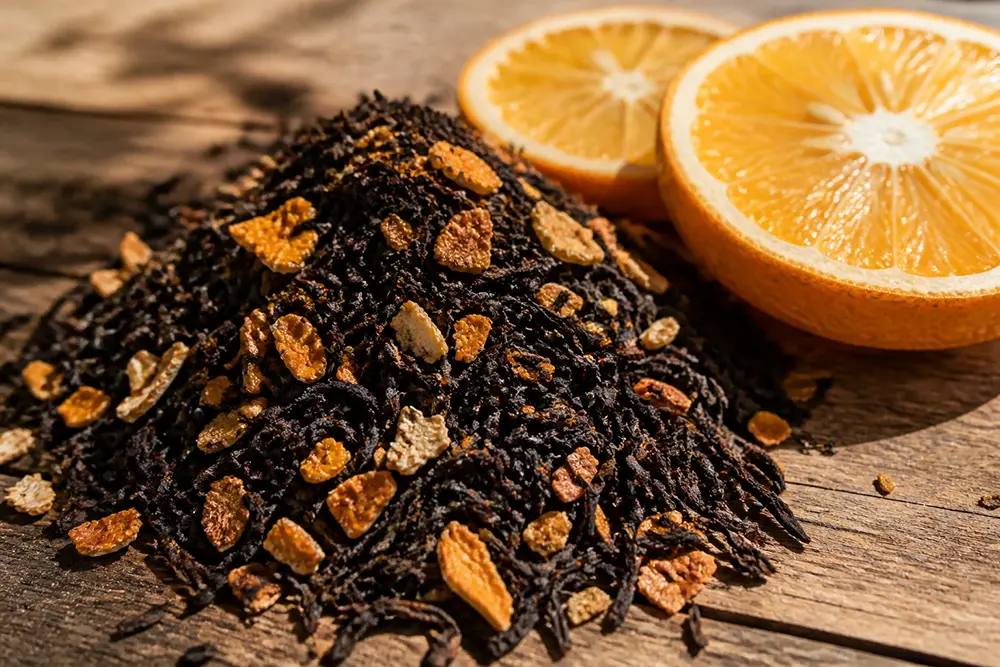
Orange‑Flavored Black Tea: A Bright Citrus Twist in the Fruit‑Infused Tea Family
Orange‑flavored tea is one of those blends that feels instantly familiar yet surprisingly layered. You get the steady backbone of black tea—bold, slightly brisk, and comforting—then a clear citrus lift that makes the cup feel lighter, fresher, and more aromatic. In many tea catalogs it sits naturally inside the fruit‑infused (or fruit‑flavored) tea category, because the leading character in the flavor comes from the fruit itself: orange (and, in your case, often bitter orange / naranj).
This article focuses on orange‑flavored black tea made with tea plus dried orange peel (zest), natural orange essence, or both—not orange blossom tea (which belongs to floral teas and has a very different profile).
What Is Orange‑Flavored Tea?
Orange‑flavored tea is typically a base tea—most often black tea—that has been scented or infused with orange character. That orange character can come from:
– Dried orange peel / zest(Dried orange peel, orange zest, bitter orange peel)
– Natural orange essential oil or essence
– A combination of peel and natural essence for both depth and aroma
The goal is not to make a cup that tastes like orange juice. A well‑made orange‑flavored tea tastes like tea first, then a clean citrus accent that can feel fresh, slightly sweet, and lightly tangy, sometimes with a gentle bitterness if bitter orange peel is used.
Because the flavoring comes from fruit ingredients, it’s commonly grouped as a fruit‑infused tea (even when the base is black tea).
Orange vs. Narenj: Why Bitter Orange Feels Special
In many regions, “orange” is a broad word that can mean sweet orange, mandarin, or bitter orange. Narenj (bitter orange) is especially loved in Persian tea culture for its aroma—vivid, citrusy, and slightly sharp—without being candy‑sweet.
In tea, bitter orange peel can contribute:
– A bright, zesty top note that rises quickly from the cup
– A pleasant, mild bitterness that pairs beautifully with black tea’s natural astringency
– A “clean finish” that keeps the blend from feeling heavy
If you’ve ever noticed that some orange teas feel perfumey while others feel natural and “peel‑like,” the difference is often the source of flavor (real peel vs. added aroma) and the type of orange used.
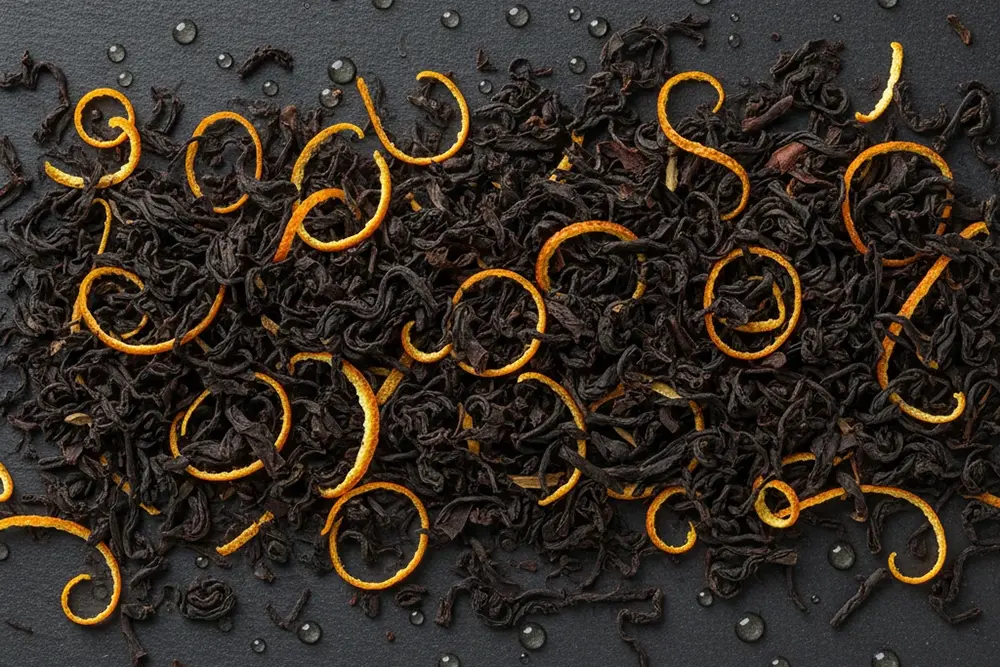
Natural orange peel and black tea leaves create a balanced fruit-infused tea blend.
What It’s Made Of (Typical Ingredient Profiles)
An orange‑flavored black tea blend usually fits into one of these styles:
1) Persian Black Tea + Dried Orange Peel
This style leans more authentic and culinary. The aroma is gentler in the dry leaf, but it can become beautifully rounded when brewed.
Pros: natural, warm, peel‑like complexity
Trade‑off: aroma may be softer than oil‑scented blends
2) Persian Black Tea + Natural Orange Essence (Oil)
This style is often more aromatic and consistent across batches. Natural essential oil can give a distinct “orange lift” even at lower doses.
Pros: strong aroma, clear orange character
Trade‑off: if overused, it can feel sharp or overly perfumed
3) Persian Black Tea + Peel + Natural Essence
A well‑balanced “best of both worlds” approach: peel provides depth; essence provides the high aromatic notes that hit your nose when you open the bag and pour hot water.
Pros: layered, full, premium feel
Trade‑off: requires careful blending to avoid overpowering the tea base
For a richer citrus balance, try our premium Black Tea blended with real narenj essence.
How It Tastes: A Simple Flavor Map
A good orange‑flavored black tea usually lands here:
– Aroma: citrus zest, orange peel, sometimes a hint of marmalade
– Body: medium to full (depending on the black tea base)
– Taste: brisk tea structure with a bright citrus accent
– Finish:clean, gently tangy; may be slightly bitter if bitter orange peel is prominent
Depending on the base tea, you might also notice:
– Malty notes (common in Assam‑style teas)
– Chocolatey or woody notes (in some Ceylon or darker black teas)
– Honeyed notes (in higher‑grade whole‑leaf black teas)
Orange works especially well because it highlights tea’s natural aromatics without masking them—when blended with restraint.
Why It Belongs in Fruit‑Infused Teas (Not Floral Teas)
This is worth stating clearly, especially for a shop category system:
– Orange‑flavored tea is driven by fruit peel or fruit essence → Fruit‑infused / fruit‑flavored teas
– Orange blossom tea (bāhar nārenj / orange blossom) is driven by flowers → Floral teas
They can smell “related,” but they are different ingredients and different sensory experiences. Orange blossom leans soft, floral, and nectar‑like; orange peel leans zesty, citrus, and slightly bitter‑sweet.
Caffeine and “Energy Feel”
Because the base is usually black tea, orange‑flavored black tea typically contains moderate caffeine—enough to feel energizing for many people, especially as a morning or early‑afternoon cup.
Orange ingredients themselves don’t add caffeine; they add aroma and flavor. What changes the caffeine level most is:
– the type of black tea
– the leaf grade (broken leaf tends to brew stronger faster)
– brewing time and temperature
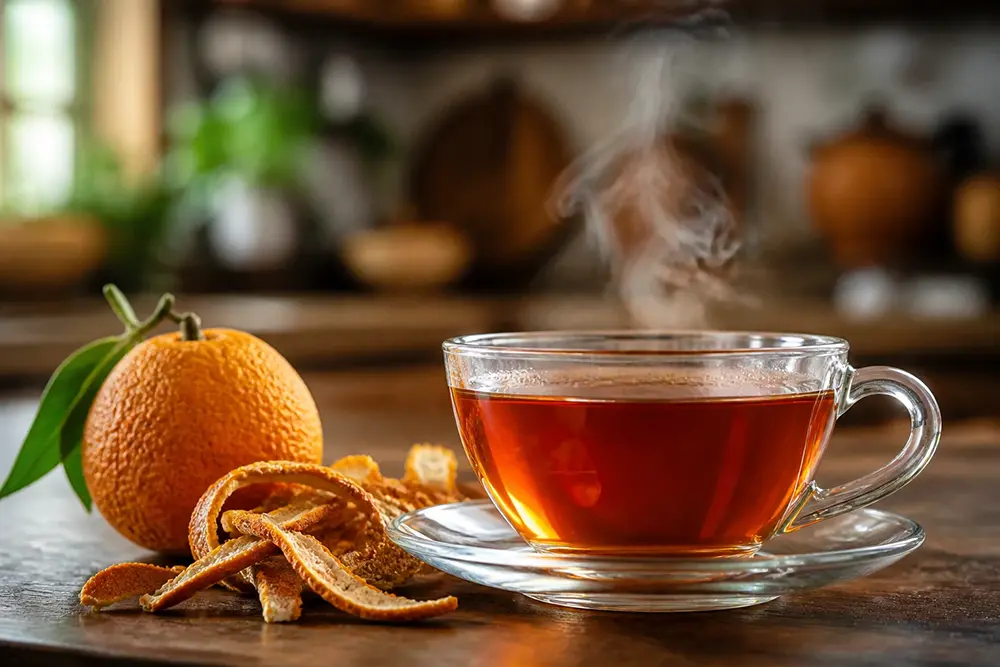
Brewed orange-flavored black tea offers a warm, citrusy, and refreshing cup.
How to Brew Orange‑Flavored Black Tea (Best Results)
To achieve the perfect balance between the rich body of black tea and the refreshing citrus notes of orange, use fresh water close to boiling and let the leaves gently release their aroma.
During brewing, pay attention to the color and scent. When the tea turns a warm amber hue and the bright orange aroma rises from the cup, it has reached its ideal point.
If the flavor feels too strong or heavy, try using slightly fewer tea leaves next time or avoid letting them steep for too long.
Conversely, if the orange fragrance seems too subtle, you can brew the tea in a covered vessel to help preserve the citrus aromas more effectively.
Serving Ideas (Classic and Modern)
Orange‑flavored black tea is versatile. Here are simple ways people enjoy it:
Plain (Best for Tasting the Blend)
Drink it without sweeteners first. You’ll notice whether the orange note is peel‑like, marmalade‑like, or more aromatic.
With a Touch of Sweetness
A small amount of sugar or honey can turn the orange note into a **marmalade impression**. If your blend uses bitter orange peel, sweetness can soften the edge nicely.
With Lemon? Usually Not Necessary
Because the tea already has citrus character, adding lemon can push it into overly sharp territory—unless your base tea is very malty and can handle extra acidity.
Milk: Optional, but Choose Carefully
Milk can mute citrus brightness. If you want a creamy cup, use a strong black tea base and only a small splash.
What to Look For When Buying (Quality Tips)
If you’re selecting or describing this tea for a store, these details help customers understand quality:
1) Ingredient clarity
– “Black tea + dried orange peel” reads natural and straightforward.
– If essence is used, “natural orange essence/oil” is a strong quality signal.
2) Balance
A good blend should still taste like tea. Orange should lift, not dominate.
3) Peel appearance
Real peel pieces often look like thin curls or flakes and contribute a more authentic aroma.
4) Freshness
Citrus oils fade over time. Good packaging and turnover matter because orange aroma is volatile.
Common Pairings (If You Want to Recommend Snacks)
Orange‑flavored black tea pairs well with:
– buttery biscuits or shortbread (citrus + butter is classic)
– dark chocolate (orange‑chocolate synergy)
– almond pastries
– lightly spiced cakes (cinnamon/cardamom), as long as spice doesn’t overwhelm the citrus
A Note on “Natural Essence” vs. Artificial Flavor
Many customers ask whether flavored teas are “real.” In orange‑flavored tea, the difference is meaningful:
– Natural orange essential oil/essence tends to smell cleaner and integrate better with tea.
– Artificial flavor can be loud, candy‑like, or one‑dimensional.
If your product uses dried nar peel and/or natural essence, that’s a strong positioning point: it signals a blend that aims for authenticity and a more premium aromatic profile.
Final Thoughts: A Citrus Lift That Respects the Tea
At its best, orange‑flavored black tea is not about overpowering citrus or perfume‑like aroma. It’s about balance.
The black tea provides structure, warmth, and depth.
The orange—especially when made with real peel or natural essence—adds brightness, lift, and a clean, aromatic finish.
When blended with restraint, orange doesn’t hide the tea. It highlights it.
Whether you prefer the sharper character of bitter orange (narenj) or a softer sweet‑orange tone, this style of tea offers something both comforting and refreshing—familiar in its black tea base, yet elevated by a vivid citrus twist.
For those who enjoy fruit‑infused teas but still want the grounding body of true tea leaves, orange‑flavored black tea sits beautifully in the middle:
structured, aromatic, and quietly sophisticated.